It has been a decade since I started working in the rubber wet pour safety flooring business. During this time, I have been able to visit a few hundred construction sites all over the world and meet several hundred wet pour flooring installers on various countries and even different continents. Some of them would ratherContinue reading “Is your polyurethane binder the love of your life?”
Category Archives: playground
The difference between a 10mm and a 15mm top layer

The top layer of a rubber safety surfacing is the one that supports wear and tear and for this reason a type of materials is used that, being flexible, withstand much better the wear due to abrasion, such as EPDM or TPV granules. These EPDM or TPV granules are pigmented during the mixing in theContinue reading “The difference between a 10mm and a 15mm top layer”
End of wetpour season in most of the Northern Hemisphere
In much of the Northern Hemisphere, temperatures below 5ºC become frequent most days and therefore the wetpour (pour-in-place) rubber surfacing season has come to an end and will not resume until next spring. Some regions have a more moderate climate and maintain a continuous season in which they continue to carry out new installations orContinue reading “End of wetpour season in most of the Northern Hemisphere”
Safety Flooring in aquatic environments
Safety is important in the surfacing design around water surfaces in outdoor and indoor areas. Slips can lead to a fall with serious consequences, especially since users – be they children, adults or the elderly – only wear bathing suits and are therefore practically unprotected if they fall. For this reason, “in-situ” wetpour (poured-in-place) rubberContinue reading “Safety Flooring in aquatic environments”
Tires or not Tires, that is the question
Sorry in advance for adapting the most famous expression at Hamlet tragedy. It was the only way I found to start a maybe long post that is around an old discussion I have been hearing and reading during the last close to 20 years. Rubber recycled from tires has been used in playground surfacing andContinue reading “Tires or not Tires, that is the question”
Granules crumbling and foaming effects
There are two kind of defects on a rubber flooring that probably and unfortunately all wetpour (pour-in-place or PIP) installers have at some time suffered in some job site. Both effects are easy to pinpoint and a concern for the customers when occurring on the top layer. On the next few lines I will tryContinue reading “Granules crumbling and foaming effects”
Primer on Outdoor Playgrounds Surfacing Primer
I’ve seen some often installers preparing a self-made primer by using their standard binder and adding whatever available solvent they had in the van. All of them probably know that polyurethanes suppliers have a portfolio of speciality products for priming, tailored to main kind of sub-bases as concrete or asphalt and they also know theirContinue reading “Primer on Outdoor Playgrounds Surfacing Primer”
RAL Colour codes and EPDM granules
Landscape Architects and Playground Designers are usually defining their safety surfacing design by using a colour code from one of the existing standards. The most frequently used Colour Standard is the Classic RAL System, that was created for defining colours for paint and coatings. This Standard is used today in architecture, construction and all industry.TheContinue reading “RAL Colour codes and EPDM granules”
Techniques for good colour transitions on EPDM top layer
Introduction One of the great advantages of wetpour (pour-in-place) rubber surfacing is the potential for using designs with different colours and all kind of shapes and graphics. Where a seam is necessary, there is a potential for joint to fail at some future time, so it is important to ensure that construction joints or overnightContinue reading “Techniques for good colour transitions on EPDM top layer”
The Safety Flooring as a Post-COVID-19 Play Space?

During recent months, playgrounds in most of the world have been lock-down as a result of the COVID-19 pandemic. Although in some countries the rules have been relaxed and some protection measures have been established, they still remain closed in various parts of the planet. My children are now mature adults and I have alreadyContinue reading “The Safety Flooring as a Post-COVID-19 Play Space?”
EPDM, TPV or Cork?
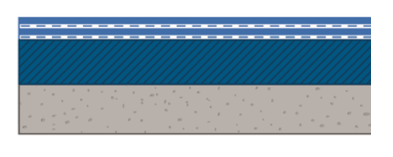
The top layer on a safety flooring is the wear and tear layer. Is the one suffering the heavy use, the big temperature changes, the effects of UV, rain and snow, the indentation from long heels, the mischief of some children, the effect of different pollution materials as leaves, detritus from animals, sand and restsContinue reading “EPDM, TPV or Cork?”
Cracks in the top layer of a rubber wet pour (pour-in-place) playground flooring

Why do you get cracks on pour-in-place rubber flooring?
How to design the wet pour safety flooring of a playground to fit the available budget
Deisgn wetpour rubber surfacing for a budget
Critical Fall Height tested with the new EN-1177:2018

CFH measurement under new EN1177:2018
 Rubberman Blog