I’m coming back from a mini-Christmas vacation where I was able to spend some time reading and enjoying family time. Wish a happy 2022 for all of you.
In one of my readings I was astonished with an article from Vineeth Venugopal on MEDIUM that was a summary of a more detailed one from Kit Chapman in the Chemistry World magazine edited by the Royal Society of Chemistry.
As we all know rubber is a material used in a lot of products from the 19th and 20th century. Tires, balls, cushions, gloves, shock absorption pieces, our playground’s flooring granules and a long list of basic goods are all made from rubber.

Originating in the Amazonian forests of Brazil, from Hevea brasiliensis rubber tree, which produces a thick latex in specialised cells, laticifers, to protect against insects, this natural polymer has spread all across the world from Africa to Asia. Today, 90 % of rubber comes from India, Sri Lanka and Southeast Asia (Thailand mainly).
The problem is that we are running out of natural rubber or already reaching the limits of sustainability. It looks like the rubber tree is very susceptible to diseases and there really isn’t any more land to plant them. We have used up all the forests. The situation is compounded by climate change as well as the ecological impact of Hevea trees, which only grow well in the tropics. Indonesia and Malaysia have already lost huge swathes of rainforest due to rubber production.

Unable to expand production, and with the Covid pandemic causing demand for latex gloves to rise exponentially, raw materials such as nitrile latex are largely unavailable until mid-2022 at the earliest.
Although synthetic rubbers exist, they are a poor substitute for the real thing. To date, attempts to replicate natural polymer chains produce a higher percentage of trans repeating units, creating more inherent weakness than natural rubber.
Another solution would be to recycle natural rubber, although as conventional tyres are compounds made of different natural and synthetic percentages, this can be complex. The vulcanisation process also limits reuse.
That’s where the flower Russian Dandelion or Dandylion or “Diente de León” in Spanish comes in. This plant produces rubber in its cell walls, especially in the root.
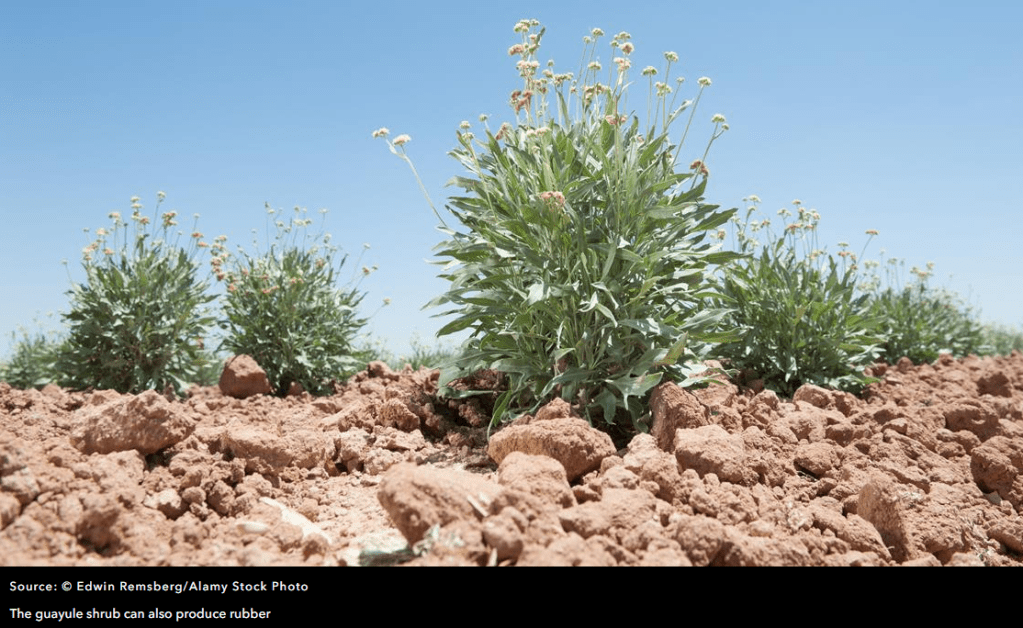
If you were to place the full natural rubber consumption of the world on dandelions, you’d have an area the size of Switzerland and Austria combined — which is not a lot when you think about it at worldwide level. These plant wastes can also be turned into biofuel.
If this work can be scaled up, the world could be on the cusp of a third rubber boom. Tires will be made from dandelions by the end of the decade according to some predictions from some scientists. Some others predict that it’s going to take time.
Take care
Sources:
- https://www.chemistryworld.com/features/how-rubber-is-bouncing-back/4012952.article
- Vineeth Venugopal – Medium
 Rubberman Blog