Today is a semi-festive day in Spain in preparation of tomorrow bank holiday and I was looking for the topic on which to write my weekly article.
While reading various articles that at some time I found interesting and kept for future reference I found one from Evan Scott published in the Tyre & Rubber Recycling website under the title “Rubber Elephant in the Room”.

The article was originally posted by Dr. Desmond Ang Teck Chye and Natasya Nabilla, from the Department of Chemistry at the University of Malaysia and appeared at the New Straits Times newspaper.
It highlights the problem of waste rubber, that defines as the “elephant in the room”, and in a call for action sums up the need for joined up thinking around the world. See below an abstract of this interesting article:
The question is: Could rubber pollution be the next environmental crisis?
Environmental pollution from excessive use of conventional plastic is widely known and has been making headlines throughout the globe. The focus of this article is to articulate the potential of rubber as the next environmental pollutant.
Perhaps due to the overwhelming volume of plastic consumption, the amount of other commodity polymers used in our daily life is given very little attention. The term plastic pollution is so commonly used and repeated that the public may not realise that other materials may possess the same hazards too.
The problem with plastic pollution largely arose from the material’s huge molecular weight and inert property, allowing it to persist for decades or centuries after they were discarded. Many polymers out there share those similar characteristics with plastics, and one of them is rubber.
Rubber can be natural or synthetic in origin, and they have both found niche applications in various industries and in our daily life. Natural rubber is produced from rubber tree, while synthetic ones are produced from polymerization of one or several types of petroleum-based chemicals. Some of the widely used synthetic rubbers include SBR, NBR, and neoprene.
The issue on biodegradable material has been somewhat controversial and such label is often exploited for marketing purposes. There are several scientific reports on biodegradation of rubber, with some showing ‘evidence of biodegradability’ of rubber articles. One of the most employed biodegradation test method is to quantitate the growth of specific microbes in mineral salt medium using rubber as the source of carbon, and the rubber is perceived as biodegradable if the microbes, which usually comprised of either bacteria or fungi can make use of the rubber as carbon source for its growth.
It is however noteworthy that positive result from such test simply shows that the rubber, just like some of the plastics, can be degraded or digested by the specific few microbes but this does not necessarily equate to the ability of the rubber to undergo biodegradation when they are discarded and left floating in the ocean, or buried deep in the landfill. In those laboratory setups, parameters such as humidity, concentration of various salt nutrients, presence of specific bacteria strains, temperature etc. are carefully controlled to optimise the growth of the microbes, and oftentimes this does not reflect the actual environment out there.
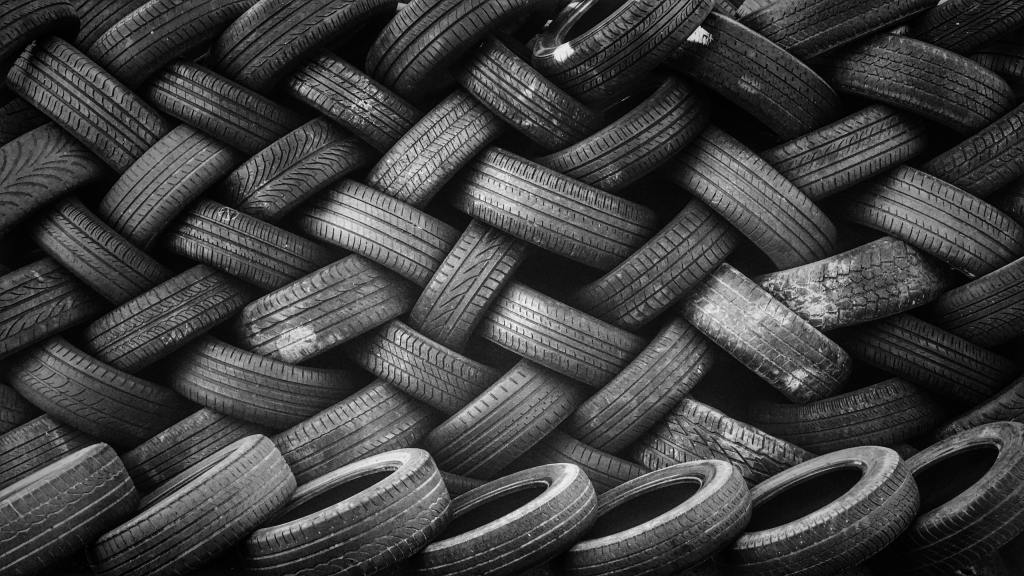
Despite many studies carried out, many questions related to biodegradation of the material remain unanswered:
- How long does a discarded vulcanised rubber articles remain in the environment?
- How does the rate of biodegradation of synthetic rubber compared to natural rubber?
- How well does the result from the laboratory biodegradation test translates to the biodegradability of the rubber articles in the actual environment?
Some of the synthetic rubbers are carefully engineered to exhibit superior chemical resistance and inertness, and logically such rubber is expected to be even more difficult to biodegrade.
Although the volume of rubber production is comparatively less than plastics, millions of tons of rubber produced annually is not an amount that one can sweep under the carpet. The impending problems related to unsustainable use of rubber is just a matter of time and it does not take a genius to figure this out. It is literally a simple mathematical equation. When the rate of production of new rubber articles greatly exceeds rate of decomposition of the used rubber articles, it equates to accumulation of rubber waste. This is the exact situation with the current plastic crisis. Before déjà vu strikes again with rubber, it is best to nip the problem in the bud.
Fortunately, there are several options that can be practiced when it comes to treating end-of-life rubber articles or rubber waste. One of the reported initiatives in valorising rubber waste include mechanically reprocess partially worn-out rubber products to a state where it is fit to use again, and one example of such practice is the retreading of used tyres. As for totally worn-out rubber products or rubber waste, they can be ground and pulverised into small particles and subsequently embedded and utilised in various rubberised materials such as concrete, asphalt, conveyor asphalt, conveyor belt and playground matting. There are also ongoing practices to convert waste rubber into fuel via pyrolysis. The process involves heating the rubber waste at temperature as high as 400 – 800 °C in the absence of oxygen. Lastly, rubber waste can also be incinerated for energy recovery purposes.
However, implementation of these initiatives has their own limitations and restrictions such as lack of proper infrastructure, lack of established system to collect suitable rubber waste, segregation of waste, economic challenges, as well as emission of toxic pollutants in some of the treatments. If we truly want the consumption of rubber and other polymeric materials to be more sustainable, there is a need for concerted efforts from various stakeholders, ranging from the policy makers to the consumers. It is our hope that everyone can strive together to do our part to make the world a greener place for the future generations.

Our business of playground and sports flooring is luckily one of the best applications of rubber recycled from tyres. The use of end-of-life recycled tyres as a cushion layer for our projects is a very sustainable example without pollution effects. We somewhat “sweep the problem under the carpet” in positive sense.
Take care
 Rubberman Blog