The cushion or shock absorption effect to protect children fall in Playgrounds pour-in-place surfacing is provided by the base layer that is applied underneath the wearing layer, in different thicknesses depending on the project Critical Fall Height (CFH) requirements of the Play equipment.
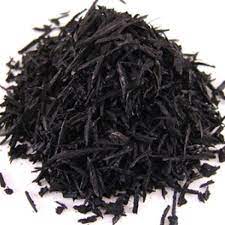
One of the most common materials used for this base layer is recycled rubber crumbs produced by granulating end of life tyres, but I’ve seen significant differences of the kind of recycled rubber used in different continents.
The most common solution used in USA is rubber buffings (shredded rubber) coming from grinding the outer layer of tires to receive new tread. These grindings are cleaned, processed, sorted into various sizes and packaged. They can use this product in USA because the cars and trucks there are usually really big and use also huge tyres and retreading is very commonly used to give new life to a tyre, so availability of enough quantities of these buffings for flooring applications is not an issue. At least not usually but you can also have some seasonal shortages.

Availability of buffings in Europe is very limited as retreading is not so common, and usually granulated SBR from end of life tyres is the most common recycled product used on base layers. Sizes of 1-4 mm, 2-6 mm and 10-12 mm are the most frequently used.
In other regions worldwide as Australia or Middle East you can find both kind of rubber from tyres depending on whether retreading is or not a common practice. Is not weird to have some seasons with shortage of any of the types in certain countries as efficiency of tyres collection system for end of tyres is different from country to country.
These products are so cheap that freight at long distances has no sense, so installers are commonly using the most easily available local product assuming it’s free of metal, stone, textile fibres, too much dust or other contaminates.

There are however significant differences on the absorption level of the different products and sizes of the granules, so if you are installing a tested full system, any change on this base layer product may have an impact of more than 15-20% in the achieved CFH, so must check carefully.
I had the opportunity to test different granule sizes and shreds dimensions for the buffings and I will give you some general inputs about how they behave and the kind of factors that have a significant influence on the CFH achieved.

First, the origin of the tyres is important, the ones coming from trucks and buses are the preferred options because they show higher virgin rubber percentage and achieve better absorption capability.
How old are the tyres has an important effect on the absorption as well as on the level of dangerous chemicals. Old tyres had less regulation restrictions and therefore the levels of unwanted PAHs / PAK / PBDEs is lower in more recently manufactured tyres. Composition of tyres has changed a lot during the last 30 years. They were moving from 40 to 60% rubber, using different enduring components, and reducing heavy materials.
How they were stored at the end of life is also important. If they were under sun on an open warehouse for a long time they will generate granules that will be a lot harder to shock absorption.
The granule size distribution measured at Sieve analysis has an effect also. I was able to test samples coming from a lot of sources, produced from tyre recycling in Spain, Germany, Denmark, Poland and many others. We tested granulated rubber of 1-4 mm, 2-8 mm, 10 mm and bigger crumbs with the same proportion of binder. The first finding was that CFH achieved has an interesting behaviour in the relationship granule sizes to critical fall height achieved. Medium size granules seem to have a better CFH and lower HIC than smaller or bigger granules.

In addition to this, big granules will left a lot of valleys of space to be fill for the top layer EPDM granules and EPDM is a lot more expensive. Small SBR granules will optimize consumption of EPDM but CFH will be not so good and installing base layer will need more time. The medium sized 2-8 mm granules have the best balance between both aspects of CFH and EPDM top layer consumption and can be achieved without too much rolling to compress base layer that would lower the absorption.
The shock absorption of most common sizes of buffings is very good. You could typically obtain the same CFH with around 10 % less thickness on base layer but as buffings availability in Europe is very short, granules becomes the only option. Some installers do a mixing of granules with certain proportion of buffings to achieve an optimised absorption.
In another post of this blog I explained the health concerns at some countries and about the bad image of products coming from tyres. Currently, other organic products or synthetic rubber products not coming from tyres are appearing and start to be used as base layer, specially in Nordic Countries or some States in North America, with restrictions on the use of tyres for flooring or infill.
Take care, be healthy and adopt the CONICA motto: work hard for soft landings.
 Rubberman Blog