Safety is important in the surfacing design around water surfaces in outdoor and indoor areas. Slips can lead to a fall with serious consequences, especially since users – be they children, adults or the elderly – only wear bathing suits and are therefore practically unprotected if they fall.
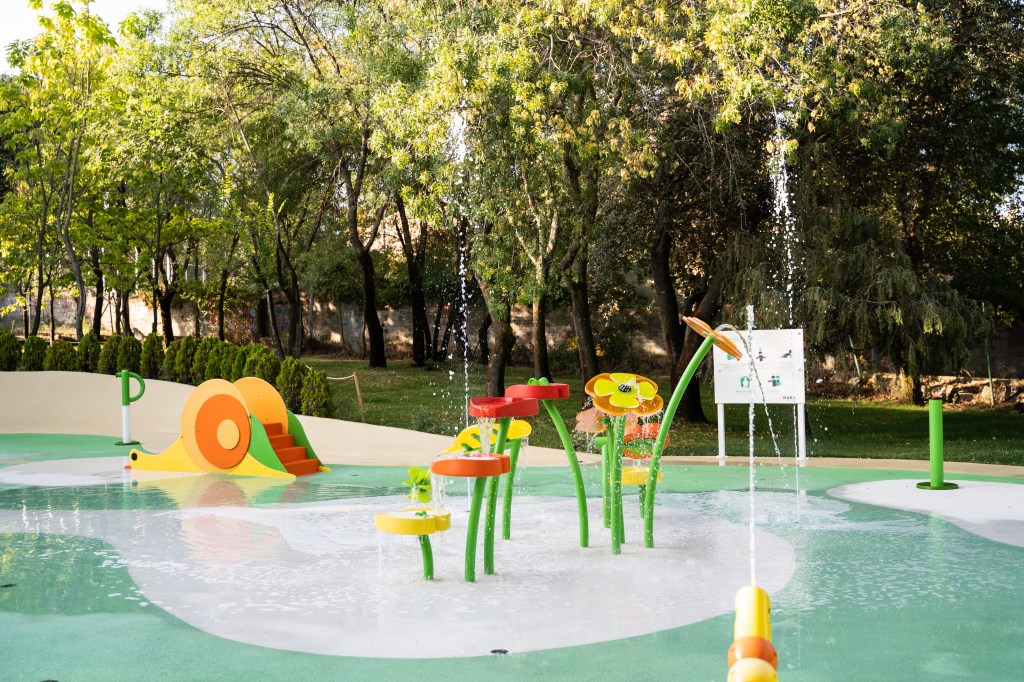
For this reason, “in-situ” wetpour (poured-in-place) rubber flooring is the most widely used in close proximity or directly in the water, such as: Splash Parks, Water Parks, Public or residential pool decks and Spas.
The technical and aesthetic requirements of safety flooring for these environments are complex and varied:
– The materials used must resist the aggressive action of chlorine, salts, algaecides and other oxidising or disinfectant chemical substances used to reduce the growth of microorganisms or maintain the pH of the water.
– The materials cannot contain toxic substances to be compliant with the standards.
– If it is sea water, they must also resist the salts and minerals dissolved in it.
– The materials must limit the proliferation of biological germs and microorganisms.
– The flooring must be non-slip to prevent falls for people who normally use it barefoot, but it must not be excessively abrasive and cause scratches in the event of a fall.
– Barefoot also requires a comfortable floor temperature to avoid burns, taking into account that these environments are in climatic zones with usually high solar radiation.
– They must be highly resistant to UV radiation, without degrading the material or causing excessive discoloration.
– They must be carried out «in-situ» to avoid joints and have a homogeneous and safe result without trip hazards.
– In some cases an absorbent layer must be included for fall height protection.
– Have an adequate degree of flammability.
– Provide good adhesion on waterproofed concrete or similar substrates.
– Enable designs with a wide range of colours.
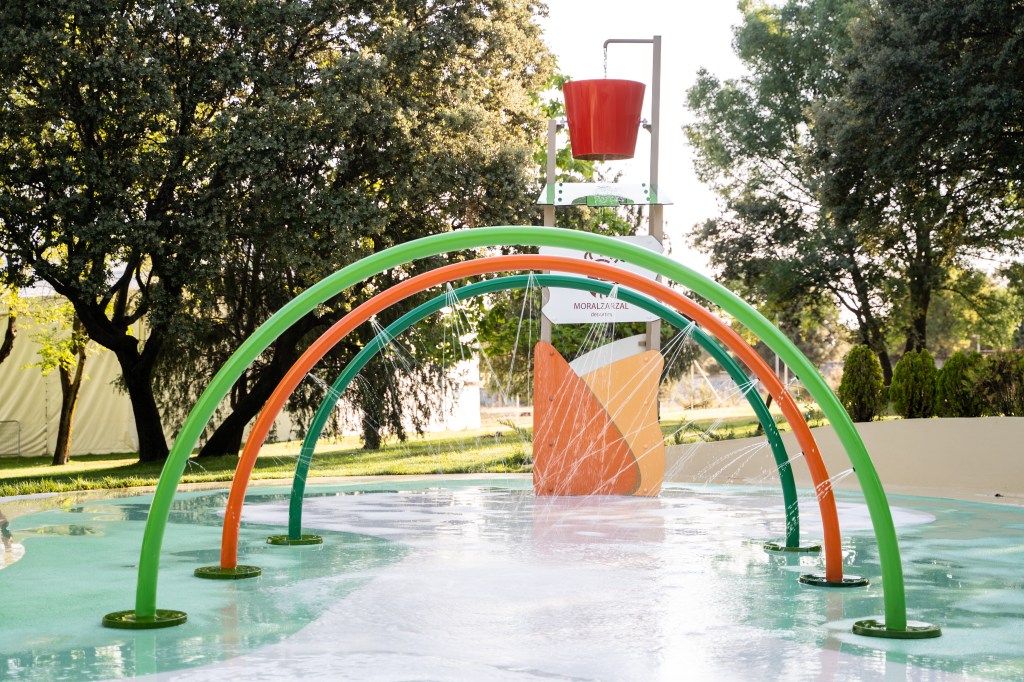
These applications may require a waterproof or permeable system depending on whether they are permanently submerged in water (for example a swimming pool or fountain) or in which the water is evacuated to be reabsorbed by a drainage system, whether or not it is later on filtered and recycled for the same or for other uses.
The solutions we use at CONICA usually have a structure in one or two layers, depending on the fall height to be protected. We always recommend a primer to ensure adhesion to the substrate and as a top coating we use a non-slip, two-component polyurethane sealant that is resistant to both chlorine and salt water. Some variants will also reduce the spread of germs and biological growth of moss, mould, fungus, etc.

For impermeable solutions we add two coats of a pore sealer and sprinkle with a granulated EPDM of 0.5 to 1.5 mm.
Play around water is one of the most exciting activities for child, creating a combined sense of adventure, refreshment and fun. This explains the tremendous success of this kind of spaces that are having an extraordinary growth Worldwide even in the current COVID-19 temporary disruption.
 Rubberman Blog