A few weeks ago one of my contacts on LinkedIn asked me about the causes of cracks in the top layer of a wet pour rubber flooring.
Apparently, he was periodically having this type of problem, he was a bit disappointed, he has always been focused on supplying a good quality surfacing and he was wondering about my opinion on the cause of this phenomenon.
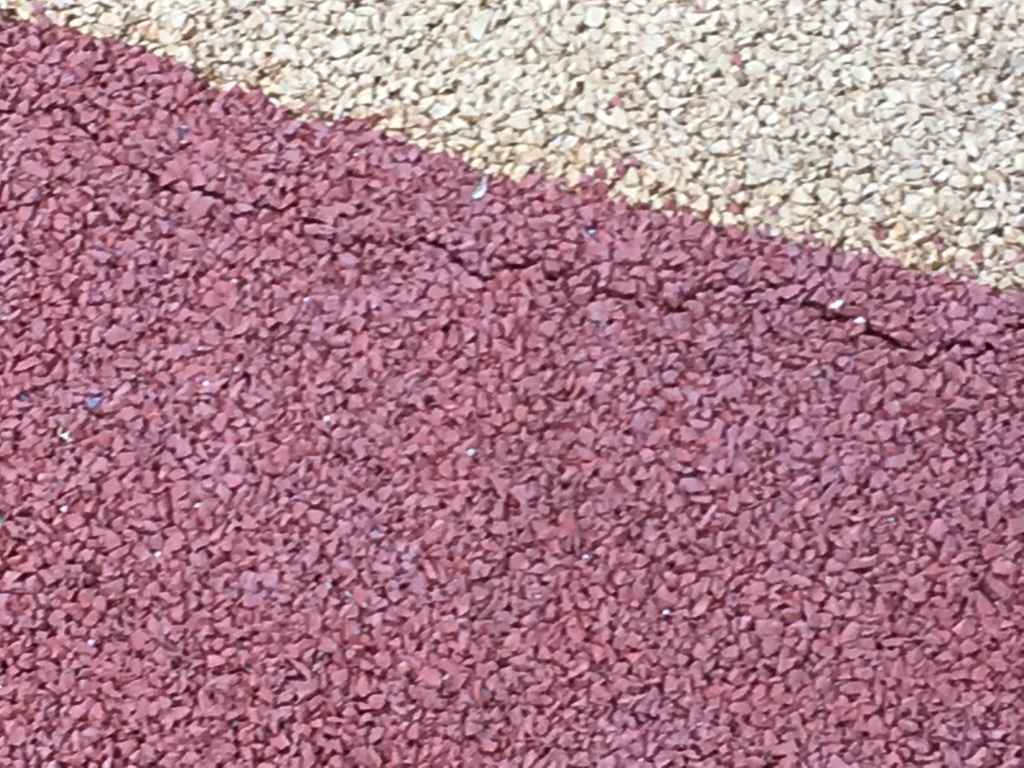
To be honest I have seen this problem only a couple of times in the last few years, so it was quite infrequent and although I had my theories about the possible causes, I preferred to ask some of my more expert colleagues at CONICA and among some installers and friends of my previous professional life.
After publishing the article on LinkedIn, I also received several comments from other contacts, that were very helpful to identify other new or related reasons.

These are the main causes of this phenomenon that we have agreed upon:
- The most common one is the use of a binder with a slow curing profile in environmental conditions in which a significant thermal variation occurs throughout the hours when the cure is not complete. (example day / night temperature differences). This can happen with any binder manufacturer, but some products have more prone to than others due to lack of elasticity (elongation at break) and other tensile properties. The binders must always be selected to suit the environmental characteristics of temperature and humidity of the work.
- Uneven curing from one area to another on the surface which results in different curing rates e.g. sprinklers spraying the edges, significant shading in one area, that generate different temperatures or curing speeds.
- Stability defects of the sub-base due to lack of compaction or the base cushion layer due to insufficient curing before starting to install the top layer.
- Significant contraction and elongation differences between the materials used at base layer and top layer due to the temperature at which each layer is at installation time.
- Bonding compatibility between the EPDM granule and the binders in terms of the tensile performance that the mixture of both can achieve.
- Mixing procedure defects such as the use of an inadequate mixer, inadequate proportions of binder, short mixing time, too long time between mixing and laying.
- Using binders out of its validity time or where the suspension of the different components has dis-aggregated.
Cracks in the top layer involve expensive repair.
Sometimes large spider cracks have no other solution than completely redo the top layer, so I’m glad I didn’t have to deal with this phenomenon too much.
We at CONICA have one of the best technical support teams, so we will make sure that you as me never see this problem.

 Rubberman Blog