What I’ve seen at installer’s job sites
Now that we must be confined at home due to this COVID-19 pandemia, I really miss a lot visiting the job sites of my rubber surfacing installer’s projects.
To be honest, when I was very often visiting playground sites I was not always happy and one of the reasons for that was seeing that some of the installers had designed his own formulation for smoothing agents using a few products that I would never recommend to use.

An inappropriate smoothing product as petrol, very often used, could generate warranty problems as granules crumbling, chemical reaction with the materials for surfacing, colour shifts, stains, rainbow or shadow effects and several other problems including potentially toxicological or health issues.
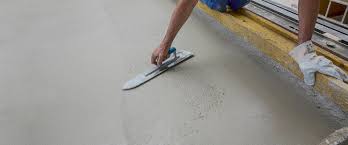
What smoothing agents are designed for?
An SMOOTHING AGENT simplifies the task of getting a nice finish of fresh surfaces of binder and rubber granules (EPDM, TPV or SBR) for playgrounds.
Your trowel or squeegee must be dipped into a shelf with the liquid to be moistened. You strip off the excess with the edge of the shelf, so the consumption of the product is very small. As a result of this agent, the granules won’t stick at your tool and the visual finish will be quite easier to achieve.

Smoothing agent main requirements
You don’t want a bad odour product if you are working all day doing wetpour surfacing. All suppliers of Smoothing Agents look for colourless, clear, low viscosity, high flash temperature products and almost odourless. You will find in the market several good products for this application. Look for the one you like. The most suitable kind of packaging for smoothing agents is a 5 Kg, 25 Kg or 50 Kg can or keg.

My recommendations
If you use a product that is not recommended by your materials supplier, he might not accept a warranty claim or liability if some problem arise. Considering the low consumption of the product per square meter, there is no reason for trying to save some cents using your own risky formulation of home made smoothing agent.
What you shouldn’t use: alcohols, acetone, petrol, solvents of aromatic chemicals and any other chemical not tested in advance by your materials supplier.
There are some solutions as soap water that can be used with no negative effects if you use them carefully to avoid foam effects on the polyurethane humidity curing binder.
The advantage of using a well formulated smoothing agent from your wetpour materials supplier is that it has been proved in a wide range of conditions without significant risk of going into troubles by any average user whatever his experience level.
Please make me happy the next time I visit your job site.
Take care
 Rubberman Blog